

The holiday season can be a time of joy and connection, but for many teens and adults, it can also bring anxiety and overwhelm. When standard coping mechanisms stop working and weekly therapy leaves too many gaps, an intensive outpatient program (IOP) can provide the structured relief you need. At Connections Wellness Group, our IOP in the Dallas-Fort Worth area offers comprehensive care to help individuals navigate seasonal triggers safely without putting life on hold.
When Holiday Stress Becomes More Than Holiday Stress
Holiday stress often escalates gradually until daily functioning feels compromised. It is important to recognize when typical holiday pressure transitions into more concerning anxiety or depression.
Key indicators that holiday anxiety is taking over include feeling for 2 weeks or more of:
- Persistent feelings of panic, dread, or sadness that does not fade.
- Withdrawal from family gatherings, social events, or routine daily activities.
- Difficulty maintaining basic routines, including disrupted sleep patterns and appetite changes.
- Feeling as though weekly outpatient therapy sessions are no longer enough to manage escalating symptoms between appointments.
What an Intensive Outpatient Program (IOP) Is – and How It Differs From Weekly Therapy
Understanding the levels of care helps individuals choose the right level of support. When evaluating IOP vs PHP and standard therapy, the key distinction lies in the frequency and structure of treatment.
- Outpatient Therapy: Consists of one or two sessions per week where you practice skills independently between visits. It is ideal when symptoms are uncomfortable but stable, and your coping mechanisms are still holding.
- Intensive Outpatient Program (IOP): An IOP program provides several structured group therapy sessions each week, with a few individual meetings as well.
- Partial Hospitalization Program (PHP): PHP functions as a full-day treatment program requiring near-daily involvement.
|
|
Weekly Therapy |
Intensive Outpatient (IOP) |
Partial Hospitalization (PHP) |
|---|---|---|---|
|
Intensity |
1-2 touchpoints a week. You do the work largely on your own between sessions. |
Several days a week in a group setting along with individual sessions. |
The most structured outpatient level; nearly daily group programming and several individual sessions. |
|
Time commitment |
1-2 hours a week |
Several days a week for several hours at a time. |
Around 5 days a week for several hours at a time. Work or school is typically paused or significantly reduced. |
|
Best for |
When symptoms are uncomfortable but stable, and your coping skills are still working. |
When your symptoms interfere with optimal functioning and weekly support isn’t enough. |
You’re not safely able to manage the day on your own, or you’re stepping down from inpatient care. |
Why the Holidays Are Often the Right Time to Start Treatment
Entering treatment during the holiday season can feel counterintuitive, but it can be a beneficial time to seek help if the holiday season brings increased mental health struggles. Additional reasons why the holidays can be preferable times to start treatment:
- Structural Breaks: School or work holidays can provide additional time off from regular responsibilities, making it easier to participate in care.
- Immediate Skill Application: Participating in real-time treatment allows you to practice newly learned emotional tools directly during stressful family interactions and holiday events.
- Preventing Breakdown: Starting an IOP program before reaching a crisis point can help restore stability more quickly.
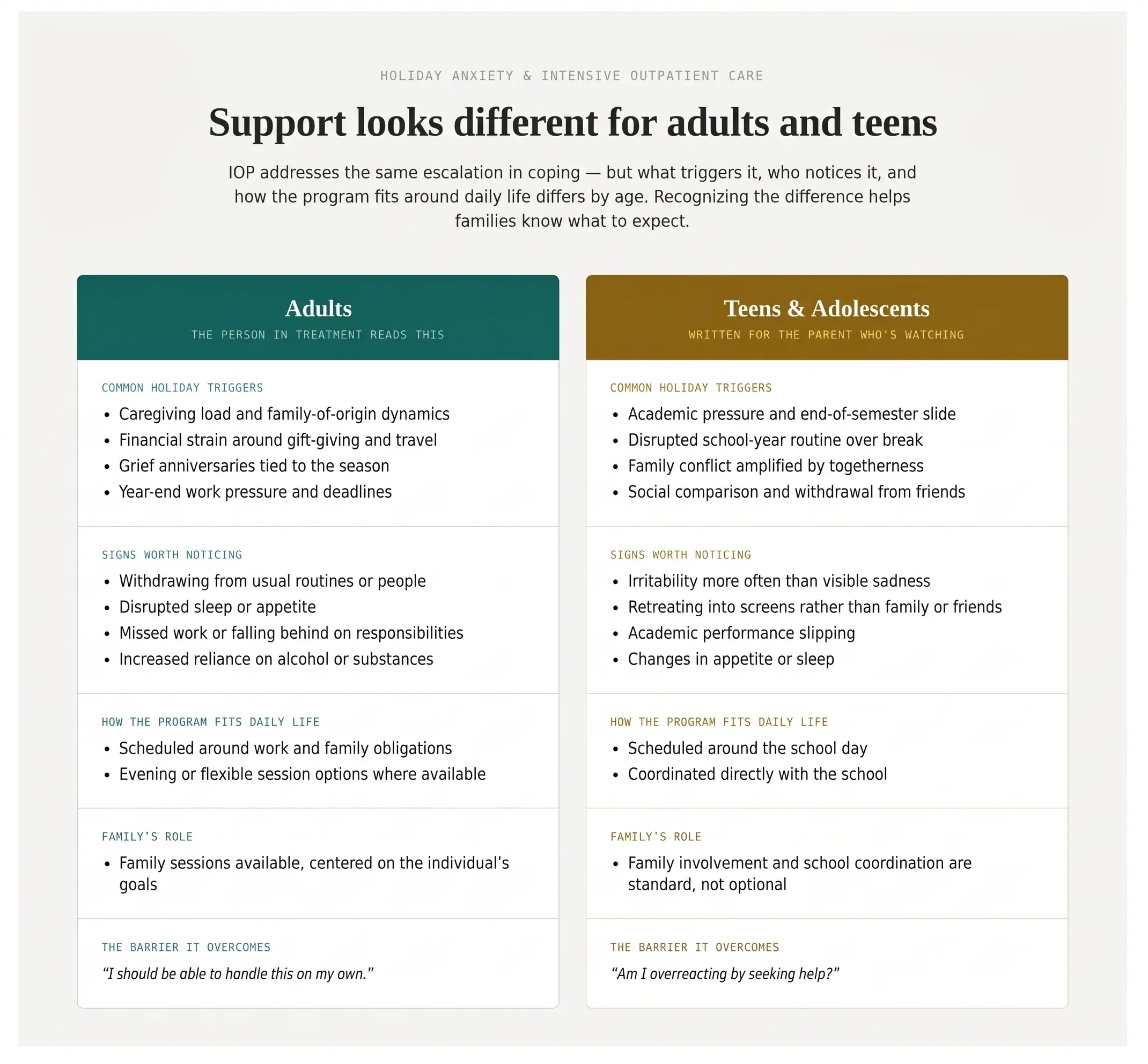
IOP Support for Adults and Teens Looks Different
While both adults and adolescents experience seasonal overwhelm, their triggers, symptoms, and treatment structures differ significantly.
For adults, common triggers include caregiving demands, financial strain, grief, and year-end work deadlines. Adults may experience withdrawal, missed work responsibilities, or difficulty managing family pressures.
For teens and adolescents, stressors might include increased academic pressure, disrupted routines over break, and amplified family conflict. Parents watching for anxiety in their child may notice irritability, or slipping academic performance. Specialized teen IOP programs encourage family and school involvement to help address these concerns.
Does Insurance Cover IOP?
In most cases, yes. Because an IOP is a clinically recognized level of mental health care, major health insurance providers frequently offer coverage for both adult and teen programs. Verification of benefits typically occurs during your initial intake, allowing clinical teams to confirm coverage options before treatment begins.
When Coping Skills Aren’t Enough, Our IOP Programs in DFW Offer A Way Forward
You do not have to struggle through seasonal overwhelm or navigate holiday depression alone. Connections Wellness Group provides compassionate, evidence-based care across the Dallas-Fort Worth area to give you or your teen the structured support needed to heal. Take the first step toward lasting emotional balance this season and request a consultation today to connect with our admissions team.